
Popularity is exactly what makes it a target
WordPress runs a massive share of websites on the internet — which sounds like safety in numbers, but it works against you when it comes to security. Hackers write attack tools aimed at WordPress specifically, because a single exploit can potentially unlock millions of sites at once. It's not that WordPress is badly built. It's that popularity turns it into the biggest, most cost-effective target on the internet — and attackers go where the numbers are.
Every plugin is a door you didn't know you left unlocked
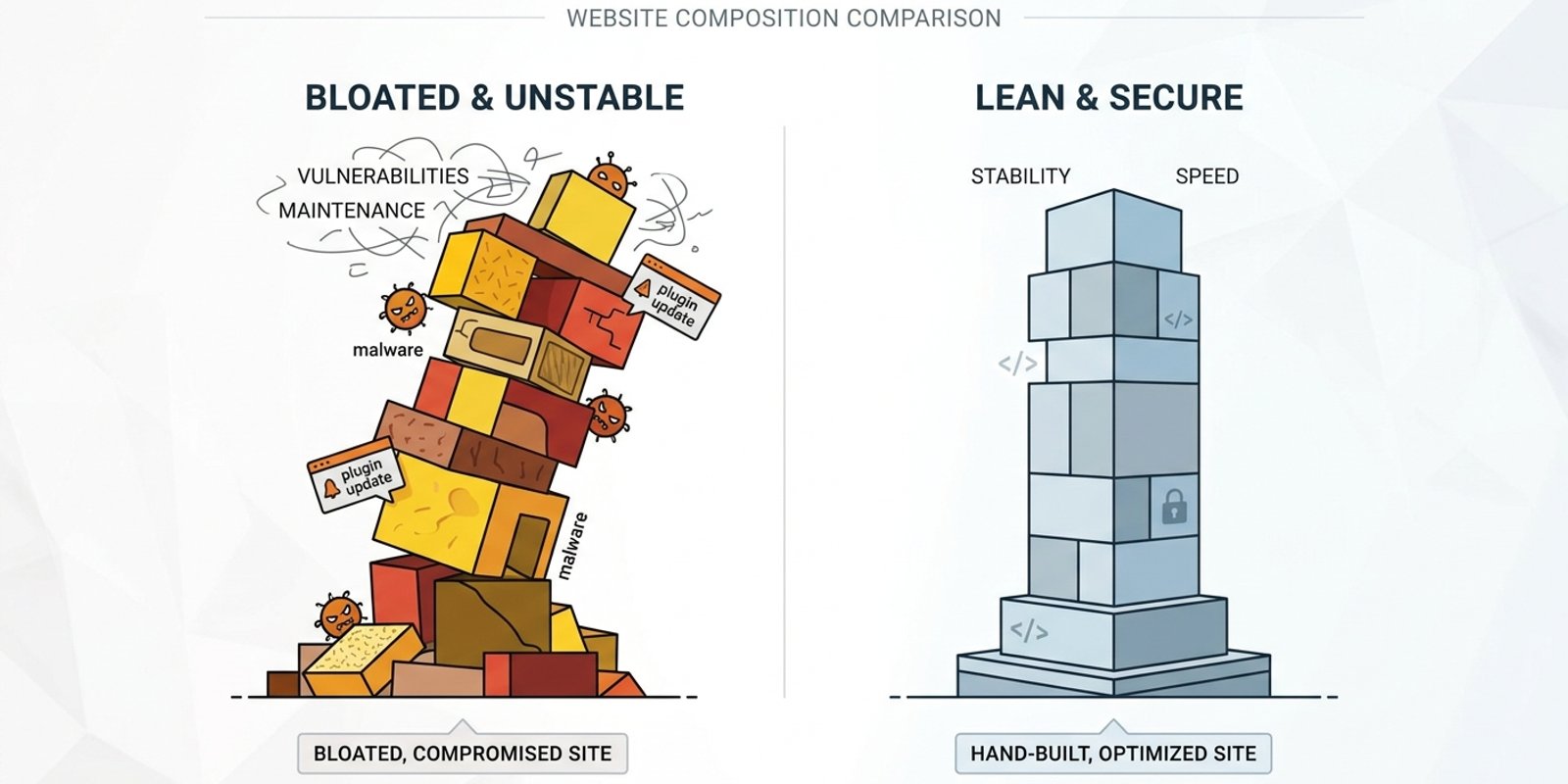
Need a contact form? Install a plugin. Need a booking calendar? Another plugin. SEO tool, image optimizer, security scanner, page builder — pretty soon your "simple" site is running fifteen or twenty pieces of third-party code, each written by a different developer, each one a potential way in for something malicious. Most WordPress hacks trace back to an outdated or poorly maintained plugin, not WordPress itself. A hand-coded site skips this problem entirely — there's nothing extra installed that can quietly go stale.
"My nephew built it" usually means nobody's driving anymore
Here's the pattern we see constantly: someone's relative or a cheap freelancer sets up a WordPress site, it works fine for a few months, and then updates stop happening. Nobody's watching for security patches. Nobody's renewing the plugin licenses. A year later the site's slow, a plugin conflict has broken the contact form, and the person who built it isn't answering texts anymore. The business owner didn't do anything wrong — they just inherited a system that needs an ongoing driver, and nobody signed up for that job.
Updates aren't optional, they're maintenance you didn't ask for
WordPress itself, your theme, and every plugin all need regular updates to stay secure — and those updates can break each other. Update one plugin and the page builder stops rendering correctly. Skip updates to avoid that, and you're running outdated, vulnerable code. Either way, someone needs to actively manage it. That's a real, ongoing job — which is exactly why so many WordPress sites end up abandoned mid-life.
Hand-coded isn't fancier, it's just leaner
A hand-coded site is built with exactly the code your business needs and nothing else — no plugin marketplace, no page-builder bloat, no mystery dependencies. That means fewer things that can break, fewer things that can be hacked, and a site that loads faster because it isn't dragging along software for features you never use. It's not a fancier way to build a website. It's a simpler one.
The bottom line
WordPress isn't a scam and it isn't broken — plenty of sites run on it just fine, with someone actively maintaining them. The real question is whether you want to be, or pay for, that ongoing maintenance job, or whether you'd rather have a leaner site with fewer moving parts and one person directly accountable for keeping it running.
Curious what a hand-coded site would actually look like for your business, maintenance included? Let's talk about it.