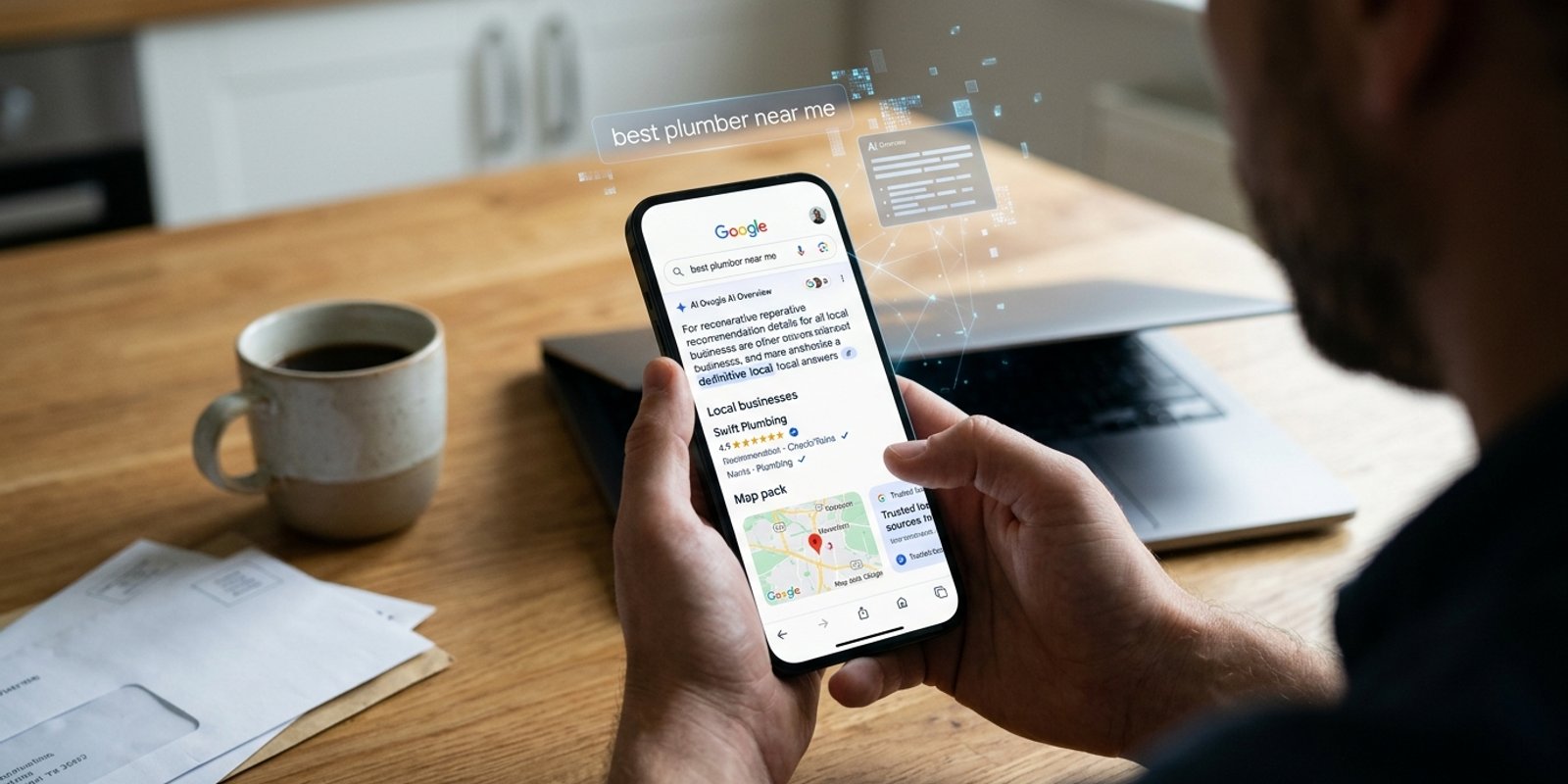

Type "best plumber near me" into Google right now. Chances are, before you even get to a list of websites, you'll see a neat little AI-generated answer box — a few businesses, a couple of sentences about each, done. No clicking required.
That's not a glitch. That's the new front door to your business. And if your business isn't the one showing up in that box, a growing number of your customers never even make it to your website to find out you exist.
This is happening whether your site is ready for it or not. The good news: getting ready for it isn't complicated. It just means understanding what changed.
Search engines used to send people to you. Now they answer for you.
For twenty years, "getting found online" meant ranking high enough in a list of blue links that someone would click through to your site. That's still part of it — but it's no longer the whole story.
Google, and increasingly tools like ChatGPT, now try to answer the question directly on the results page. They pull together a short summary of "who does this, and are they good," and show that before any list of links. Some searches never produce a click at all anymore — the AI's summary is the entire interaction.
For a local business, that means the game isn't just "rank well" anymore. It's "be clear enough, and credible enough, that the AI feels confident naming you."
AI reads your website very differently than a person does
A human visitor looks at your homepage, sees a clean layout, and figures out in a couple of seconds what you do and where you're located. AI systems don't "look" — they parse. They're scanning the actual code behind the page, trying to answer basic questions: What service is this? What city? What do reviews say? Is this information consistent everywhere else this business is mentioned?
If that information is buried in decorative code, split across ten unnecessary plugins, or just vague ("we provide quality solutions for all your needs"), the AI has nothing solid to work with — and it'll quietly recommend a competitor who gave it something clearer.
Generic template sites tend to confuse more than they help
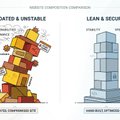
This is where template builders run into trouble. To stay flexible enough for a florist, a law firm, and a food truck to all use the same theme, they generate a lot of extra, generic code just to render a simple page — plus whatever bloat came bundled with the plugins layered on top.
None of that is necessarily visible to a customer. But it's exactly the kind of noise that makes it harder for an AI system to pull out the plain facts about your business quickly and confidently. A hand-coded site skips all of that — it's just the content that matters, structured clearly, with nothing extra in the way.
What actually helps you show up in AI answers
None of this requires chasing algorithm tricks. The businesses doing well right now are simply doing the fundamentals properly:
- Clear, specific service and location information — not vague marketing language
- Consistent business details (name, address, phone) across your site, Google Business Profile, and directories
- Genuine customer reviews, since AI treats them as a trust signal
- A fast, clean site that doesn't bury the basics under unnecessary code
- It's less "outsmart the algorithm" and more "make it easy for a machine to understand what a human would understand at a glance."
The bottom line
AI search isn't a future trend to prepare for someday — it's already shaping how customers find local businesses today. The businesses that show up in those AI answers aren't necessarily the flashiest. They're the ones whose sites are clear, clean, and easy to read — for people and machines alike. A cluttered template site makes that harder than it needs to be.